Published: August 2026
If you are buying a home in Sevierville, Gatlinburg, Pigeon Forge, or anywhere along the East Tennessee foothills in summer 2026, you are entering one of the most active and competitive real estate markets in the region. The Great Smoky Mountains corridor draws buyers from across the country — primary residence seekers, retirees, and investment property buyers alike. Many of them find out the hard way that inspecting a mountain home in August is a different discipline from inspecting a suburban ranch in Nashville or a flat-lot bungalow in Knoxville.
The good news: summer is actually one of the best times to schedule your inspection. Peak heat, peak humidity, and peak pest activity all surface problems that cooler months can mask. The key is finding a home inspector in Sevierville TN who knows what to look for in this specific terrain — and knows what August conditions reveal.
Tom Maides at Accu-Spec Inspection Services has inspected mountain properties in this market since 1993. He inspects every property personally. Here is what that experience has taught him about buying in East Tennessee this summer.
What Home Inspectors Find in Sevierville-Area Properties
East Tennessee homes carry a distinct set of inspection findings that you will not encounter in most markets. The mountain terrain, the humid subtropical climate, the popularity of vacation short-term rentals, and the prevalence of rural infrastructure all combine to create a unique risk profile.
Foundation and Slope Conditions
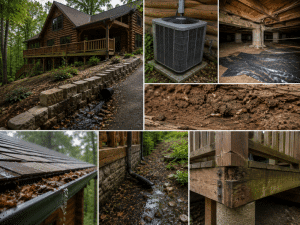
Homes in Sevier County are frequently built on hillside lots with pier-and-beam foundations, concrete piers on grade, or partial slabs that must manage lateral pressure from the slope above. Hillside grading that has shifted over time can redirect water toward the structure rather than away from it. Retaining walls — common on steep mountain lots — develop cracks and movement that go unnoticed until they become a drainage or stability problem. Tom walks the full grade perimeter on every inspection, not just the foundation walls.
HVAC Systems Under Peak Load
August in East Tennessee means sustained heat and humidity levels that push HVAC systems harder than in any other month. A system that appears functional in March may show meaningful strain or a capacity deficiency in August, when it is operating at its design limit. Inspection findings in summer include refrigerant issues, undersized equipment for the square footage, condenser coils choked with vegetation or debris, and poor return-air design in homes with significant ceiling-height variation — common in chalet-style construction. Tom tests HVAC systems at full operating load and documents temperature differential performance in every report.
Pest Activity and Wood Damage
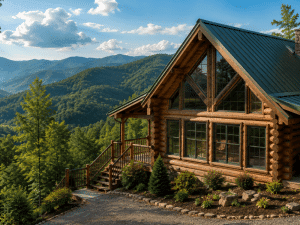
Subterranean termites are active in East Tennessee from spring through late summer, with peak swarming and tunneling activity continuing well into August. Mountain properties with exposed wood sill plates, log siding in ground contact, or crawl space moisture create conditions that accelerate termite activity and wood-boring insect damage. Wood rot driven by moisture and insect activity can appear nearly identical from the surface — a full inspection distinguishes between the two. Log-construction homes and those with heavy timber framing require additional attention at base courses, window penetrations, and deck ledger attachments where moisture and wood meet soil or concrete.
Deck and Porch Structural Integrity
Decks on Smoky Mountain vacation homes and primary homes take a level of stress that a standard suburban deck never sees — large seasonal gatherings, year-round outdoor use, mountain wind exposure, and extreme temperature cycling between summer highs and winter lows. The most common findings on decks in this market: undersized ledger-to-wall connections, missing joist hangers, inadequate post anchoring to piers or footings, and railings that do not meet current code load requirements. These findings are not cosmetic — they are safety issues. Tom checks every deck structure as a separate, detailed component of the inspection, not as a walk-across.
Why Summer 2026 Is a Critical Time to Inspect
The East Tennessee housing market has remained active through mid-2026, with the Smoky Mountain corridor continuing to draw buyers who are purchasing both primary residences and short-term rental investment properties. Inventory has shifted in parts of Sevier County, giving buyers more options than they had in the peak seller’s market years — but that also means some of the homes now on the market have sat longer, and deferred maintenance is showing up in listings that were previously moving too fast for buyers to scrutinize carefully.
August inspections carry a second advantage: the crawl space. In an East Tennessee crawl space, August is the month when moisture problems are fully expressed. Condensation on ducts and joists, vapor barrier failures, standing water from summer rain events, wood rot at its annual peak — all of it is visible and measurable during a summer inspection in a way that a January inspection may not reveal. If you are purchasing a mountain property and you skip the crawl space or accept a superficial inspection of it, you are accepting risk you cannot quantify until after closing.
Common Seasonal Findings: What Accu-Spec Reports Show in Summer
In summer months across the Sevierville and Gatlinburg service area, Tom consistently documents the following in buyer inspection reports:
- HVAC temperature differential outside the acceptable range — indicating a system working too hard or losing efficiency under peak seasonal load
- Crawl space moisture and vapor barrier failure— compounded by East Tennessee's extended humid season
- Termite activity or evidence of previous termite damage — requiring treatment documentation and structural assessment before close
- Deck ledger and post connection deficiencies — found more frequently on older vacation properties that were built to lower code standards
- Drainage issues on hillside lots — visible in summer after heavy rain events reveal how water moves across the property
- HVAC condenser vegetation encroachment— overgrown landscaping reducing airflow and system efficiency
Each of these is documented in your same-day report with photographs and a clear explanation of what was found, why it matters, and what the typical resolution looks like.
Questions Sevierville Home Buyers Ask About Inspections
What does a home inspector in Sevierville TN actually check?
A home inspector in Sevierville TN checks all standard components — roof, foundation, exterior, electrical, plumbing, HVAC, insulation, and interior — plus the terrain-specific items that matter in the Smoky Mountain market: hillside drainage and grading, crawl space moisture and vapor barrier condition, deck structural connections, log or timber frame wall integrity, and septic system access when applicable. Accu-Spec also evaluates HVAC performance under load, not just visual condition.
Is August a good time to get a home inspection in East Tennessee?
August is an excellent time to get a home inspection in East Tennessee because peak heat and humidity reveal HVAC performance deficiencies, crawl space moisture problems, and pest activity that cooler-season inspections often miss. Summer also shows hillside drainage conditions after heavy rain events, making foundation and grading issues easier to evaluate. Buyers who inspect in summer have more complete information than those who inspect in fall or winter.
How do mountain homes in the Smoky Mountains differ from standard homes for inspection purposes?
Mountain homes in the Smoky Mountains often include log or heavy-timber construction, hillside pier-and-beam foundations, rural septic systems not connected to municipal sewer systems, large exterior decks subject to heavy seasonal use, and crawl spaces prone to high humidity. These features require an inspector with specific regional experience — a standard checklist designed for conventional construction does not adequately address the terrain and building types of the Smoky Mountains.
Do I need a mold or septic inspection when buying in Sevierville?
Buyers purchasing any property in Sevier County with a crawl space are strongly advised to add mold testing to their inspection, given East Tennessee’s sustained humidity season. Buyers purchasing properties not connected to municipal sewer — common in Gatlinburg, Wears Valley, and rural Sevier County — should add a septic inspection. Accu-Spec currently offers 50% off mold testing with code MOLD26 and 50% off septic testing with code SEPTIC26, both valid through August 31, 2026.
How long does a Smoky Mountain home inspection take, and when do I get the report?
A thorough inspection of a Smoky Mountain property — including crawl space, deck, HVAC, and full exterior — typically takes two to four hours, depending on the size and complexity of the home. Accu-Spec delivers the complete written report the same day as the inspection. This matters because inspection contingency windows in the Sevierville market are short, and buyers need their findings quickly to make informed repair requests or negotiation decisions.
Schedule Your Sevierville TN Home Inspection
Accu-Spec Inspection Services serves buyers throughout the greater Smoky Mountain corridor — Sevierville, Gatlinburg, Pigeon Forge, Knoxville, and Maryville. Tom Maides holds Tennessee Home Inspector licenses #057 and #418, InterNACHI Certified Professional Inspector credentials, and has operated in this market since 1993. He inspects every property personally. Every report is delivered the same day.
If you are under contract on a home in East Tennessee this summer, do not accept a generic inspection. Book with someone who has spent decades in this terrain and knows what August reveals.
Call or text: 865-658-1050
Current Offers (through August 31, 2026):
– 50% OFF Mold Testing — use code **MOLD26**
– 50% OFF Septic Testing — use code **SEPTIC26**