Published: November 2026
Once leaf season wraps up, the Sevier County real estate market changes character. The crowds thin, some fall listings remain available, and buyers still looking in Sevierville, Pigeon Forge, and Gatlinburg between Thanksgiving and the New Year may have more time to evaluate their options.
But buying a home or cabin in the Smoky Mountains during winter raises an important question: Can a home inspection provide useful information when temperatures drop, roofs collect frost, and parts of the property are covered with leaves or snow?
A winter home inspection in Sevierville, TN, can reveal heating performance, insulation concerns, moisture conditions, and drainage patterns that may be less noticeable during warmer months. However, cold weather can also limit certain evaluations, including air conditioning, roof surfaces, and winterized plumbing systems.
Understanding what an inspector can and cannot evaluate helps buyers make informed decisions before closing.
Is It Worth Getting a Home Inspection in Sevierville, TN, During Winter?
Yes. A winter home inspection evaluates the same major systems and components as an inspection performed during warmer weather, although seasonal conditions may affect what can be safely accessed or operated.
A typical home inspection includes accessible portions of the:
Roof covering, attic, and ventilation
Foundation, structure, and crawl space
Electrical service, panels, and accessible components
Plumbing fixtures and visible piping
Heating and cooling equipment
Interior rooms, windows, doors, and ceilings
Exterior siding, drainage, decks, and stairs
Accu-Spec Inspection Services evaluates readily accessible systems and components and provides a written inspection report documenting observations, photographs, and applicable limitations.
What changes during winter is not the overall purpose of the inspection but the conditions under which it takes place.
Cold weather can make certain building conditions more noticeable while preventing others from being fully evaluated. Knowing the difference helps buyers understand the report and determine whether additional evaluations are necessary.
What Can a Winter Home Inspection Reveal That Summer May Not?
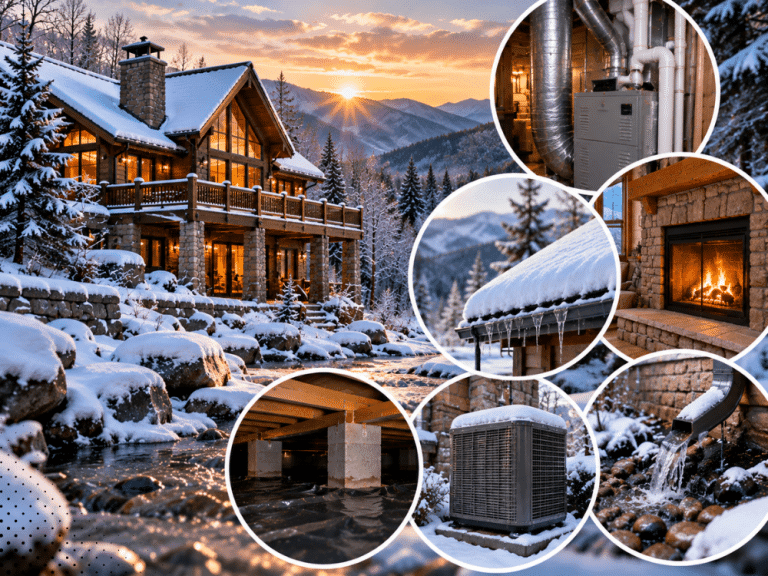
Several conditions affecting homes and cabins in the Smoky Mountains become easier to observe during colder or wetter weather.
Heating System Performance During Cold Weather
Winter provides an opportunity to observe a heating system operating under actual seasonal conditions.
During warmer months, a furnace or heat pump may receive only a brief operational check. In December or January, the equipment is more likely to be actively heating the property.
During a winter inspection, an inspector may evaluate:
Whether the heating system responds to normal thermostat controls
Whether accessible supply registers deliver heated air
Unusual equipment sounds or operating conditions
Visible conditions affecting accessible heating components
Whether installed auxiliary heating functions can be evaluated under appropriate conditions
For Smoky Mountain cabins equipped with heat pumps and auxiliary heat, cold-weather operation can provide useful information about how the system functions.
However, a standard home inspection is not a comprehensive HVAC performance test. Confirming heating capacity, efficiency, or every backup heating sequence may require a qualified HVAC contractor.
Heat Loss, Attic Condensation, and Insulation Conditions
Cold outdoor temperatures can make differences between heated and unheated areas more noticeable.
An inspector may observe condensation on windows, damp roof sheathing, visible insulation gaps, or other conditions associated with moisture movement and heat loss.
Common observations include:
Condensation on interior window surfaces
Moisture staining or dampness in accessible attic areas
Missing or displaced insulation
Visible openings around penetrations
Conditions suggesting inadequate attic ventilation
Warm, moisture-laden indoor air entering a cold attic can condense on cooler surfaces. Over time, persistent moisture may affect roof sheathing and other building materials.
These observations help buyers understand where further investigation may be appropriate.
Not every cold surface or condensation pattern confirms an insulation defect. Additional evaluation may be necessary to determine the underlying cause.
Drainage and Crawl Space Moisture During Wet Weather
Winter rain can make drainage patterns more apparent, particularly on the sloped lots common throughout Sevier County.
During wet conditions, inspectors may observe how surface water moves around the property and whether visible drainage features direct water away from the building.
Conditions worth reviewing include:
Downspouts discharging near foundation walls
Surface runoff moving toward the home
Water collecting along uphill foundation areas
Damp soil or visible moisture in crawl spaces
Erosion channels forming near walkways or structural supports
A property that appears dry during late summer may show different moisture conditions after several days of winter rain.
For buyers considering hillside cabins in Gatlinburg or Pigeon Forge, understanding visible grading and drainage conditions is an important part of evaluating the property.
A home inspection documents observable conditions at the time of the visit; it does not predict every drainage condition that may occur during future storms.
Fireplaces, Gas Logs, and Wood Stoves
Fireplaces and supplemental heating equipment are common features in Smoky Mountain homes and vacation cabins.
During winter, these systems may have been used recently, making certain visible conditions easier to identify.
An inspector may observe:
Soot or smoke staining around the fireplace opening
Visible deterioration of accessible components
Accessible damper conditions
Clearances between heating equipment and nearby combustible materials
Visible conditions associated with gas logs or wood-burning appliances
The extent of the evaluation depends on the equipment, accessibility, operating conditions, and applicable inspection standards.
A standard home inspection does not replace a specialized chimney inspection, flue evaluation, or professional servicing.
If a fireplace or wood stove is an important feature of the property, buyers should consider whether a qualified chimney or fireplace specialist is needed before closing.
What Can’t a Winter Home Inspection Fully Evaluate?
Winter inspections provide valuable information, but some components cannot be safely operated or completely observed in cold-weather conditions.
These limitations are important because they affect what buyers can reasonably conclude from the inspection report.
Air Conditioning Systems in Cold Temperatures
Central air conditioning equipment may not be operated in cooling mode when outdoor temperatures fall below the manufacturer’s recommended operating range.
Operating certain systems under unsuitable conditions can affect equipment performance or potentially damage components.
During a winter inspection, the inspector can still document accessible equipment and visible conditions.
The report may include:
The type and general visible condition of the equipment
Observable installation or maintenance concerns
Equipment age when reasonably determinable
Whether cooling operation was restricted by outdoor temperature
Heat pumps may be evaluated in heating mode when conditions permit, but that does not confirm the system’s full cooling performance.
If cooling operation cannot be tested, buyers may consider arranging an HVAC evaluation when conditions allow.
Roof Surfaces Covered by Frost, Ice, or Wet Leaves
Winter weather can limit how closely roof coverings can be examined.
Frost, ice, snow, and wet leaves can conceal roofing materials and create unsafe walking conditions.
Steep metal roofs and elevated roof sections on mountain cabins may present additional access challenges.
When walking the roof is unsafe or impractical, an inspector may use other accessible observation points, such as:
Ground-level views
Accessible roof edges or ladder positions
Visible portions of the roof covering
Accessible attic areas beneath the roof
These methods can provide useful information, but they do not guarantee that every roof surface or concealed condition can be evaluated.
The inspection report should identify significant limitations and areas that could not be adequately observed.
If roofing conditions warrant further evaluation, a qualified roofing contractor may need to examine the roof when weather permits.
Winterized or Vacant Cabins
Some vacation properties and seasonal homes in Sevier County are winterized when they are not occupied.
Winterization may involve shutting off the water supply, draining plumbing lines, placing antifreeze in traps, or disconnecting certain utilities.
When utilities are unavailable, an inspector cannot perform normal operational checks on affected systems.
For example:
Plumbing fixtures cannot be fully operated without water.
Water heaters cannot be evaluated normally when disconnected or drained.
Electrical equipment cannot be operated without power.
Fuel-burning appliances may not operate when the gas supply is shut off.
Before scheduling an inspection of a winterized cabin, ask the seller or seller’s representative whether utilities can be activated and the plumbing professionally de-winterized.
De-winterization should be handled by an authorized, qualified party rather than assumed to be part of a standard home inspection.
If systems remain inactive, the report should explain which components were not tested.
Exterior Areas Covered by Snow or Debris
Snow, frost, and accumulated leaves can conceal important exterior surfaces.
Depending on the conditions, an inspector may have limited visibility of:
Walkways and exterior steps
Deck boards and outdoor surfaces
Foundation walls
Grading near the home
Retaining walls and drainage features
An inspector should document significant visibility limitations rather than assume concealed areas are in satisfactory condition.
Pools, Hot Tubs, and Other Seasonal Amenities
Vacation rental cabins in the Smoky Mountains may include amenities that are important to a buyer’s intended use of the property.
During winter, pools may be closed, irrigation systems may be shut down, and hot tubs may be drained or covered.
These conditions can prevent normal operation or limit the evaluation.
If a pool, spa, or other seasonal feature is an important part of the purchase, discuss it with the inspection company before the appointment.
Specialized inspections or follow-up evaluations may be needed, depending on the equipment and its condition.
How Should Homebuyers Handle Systems That Cannot Be Tested?
When weather or winterization prevents an inspection of certain components, buyers should treat those limitations as important information rather than assume the equipment is functioning correctly.
There are several practical steps to consider.
1. Confirm utility availability before the inspection. Ask whether water, electricity, and gas will be available and whether any winterized systems can be safely returned to service.
2. Review the inspection report’s limitations. Pay attention to components that were not operated, areas that could not be accessed, and the reasons provided.
3. Arrange specialist evaluations when appropriate. HVAC contractors, roofers, plumbers, or other qualified specialists may be able to provide additional information about specific components.
4. Discuss inspection timing with your real estate agent. Depending on the purchase agreement, it may be possible to arrange follow-up evaluations before applicable deadlines.
The inspector’s responsibility is to document observable conditions and explain the inspection’s limitations.
Decisions about contract terms, negotiations, and contingencies should be discussed with your real estate agent or other appropriate professional.
What Makes Winter Home Inspections Different in the Smoky Mountains?
Homes and cabins around Sevierville, Gatlinburg, and Pigeon Forge have characteristics that deserve particular attention during colder months.
Elevation, sloped lots, exposed building components, and seasonal property use can all affect winter inspection conditions.
Plumbing in Crawl Spaces and Unheated Areas
Plumbing lines located in unheated spaces may be more exposed to freezing temperatures.
Examples include supply piping in vented crawl spaces, exterior walls, and cantilevered floor sections.
An inspector can review accessible piping, visible insulation, and other observable conditions associated with freeze exposure.
However, a visual inspection cannot establish that plumbing will never freeze during extreme weather.
Steep Driveways and Mountain Property Access
A gravel driveway that is easy to navigate during October may become more difficult during icy or snowy weather.
This is particularly relevant to elevated cabins and properties accessed by steep private roads.
Although a standard home inspection does not provide a comprehensive road-condition assessment, buyers should consider visiting the property during winter conditions when it is safe to do so.
For short-term rental investors, access may also affect how guests and service providers use the property during colder months.
Elevated Decks, Stairs, and Exterior Walkways
Many Smoky Mountain cabins feature elevated decks, exterior stairways, and outdoor living spaces built along sloped terrain.
During winter, moisture, frost, and ice can affect the usability of these areas.
An inspector may evaluate accessible deck framing, connections, guards, handrails, and stair components within the applicable inspection scope.
Buyers should also consider seasonal factors such as slippery surfaces, drainage, and exterior lighting.
Carbon Monoxide and Smoke Alarms
Heating season brings increased use of fuel-burning equipment, including furnaces, fireplaces, and gas appliances.
Buyers should pay attention to the presence and accessible condition of smoke and carbon monoxide alarms.
The U.S. Fire Administration’s smoke alarm guidance provides additional information about smoke alarm placement and maintenance.
Carbon monoxide alarms should also be considered in accordance with applicable safety guidance and requirements.
Private Wells and Septic Systems
Some rural properties outside Sevierville, Pigeon Forge, and Gatlinburg rely on private wells and septic systems.
These systems typically require evaluations beyond the scope of a standard home inspection.
During winter, buyers may also want to consider whether accessible well-house components and exposed water lines have appropriate protection from freezing conditions.
If the property uses a private well or septic system, discuss separate testing or evaluation services before scheduling.
What Does a Home Inspection Cover in Tennessee?
A home inspection is primarily a visual evaluation of readily accessible building systems and components at the time of the inspection.
It is not destructive testing, a guarantee of future performance, or a comprehensive code-compliance inspection.
A home inspector generally evaluates accessible components according to applicable standards and documents significant observed conditions.
The InterNACHI Standards of Practice provide an industry reference for residential inspection scope and limitations.
Home inspectors in Tennessee are regulated through the Tennessee Department of Commerce and Insurance.
Additional services such as radon testing, well water testing, and septic evaluation have separate procedures and limitations.
These services may be worth discussing when purchasing a mountain cabin, rural residence, or seasonal rental property.
Frequently Asked Questions About Winter Home Inspections
Is a winter home inspection less thorough than a summer inspection?
Not necessarily. A winter home inspection follows the applicable inspection scope, but seasonal conditions may limit access or equipment operation. Air conditioning, frost-covered roofs, and winterized plumbing are common examples. Winter can also make heating operation, condensation, and wet-weather drainage conditions easier to observe.
Why won’t a home inspector run the air conditioning in December?
Some air conditioning systems should not operate in cooling mode below temperatures specified by the manufacturer. Operating them outside recommended conditions may affect performance or cause equipment damage. The inspector can document visible conditions and explain why cooling was not tested. Additional HVAC evaluation may be appropriate.
Can a winterized cabin in Sevier County still be inspected?
Yes. A winterized cabin can still receive a home inspection, but systems without active utilities may not be fully evaluated. Ask the seller or authorized representative whether the property can be safely de-winterized before the appointment. The inspection report should identify components that could not be operated.
Can a roof be inspected when it has frost or ice?
Yes, although the inspection may be limited. The inspector can observe accessible roof areas from safe vantage points and examine visible conditions from the attic when accessible. Frost, ice, and snow may prevent roof walking or conceal roofing materials. Significant limitations should be documented in the report.
How long does a winter home inspection take?
Inspection time depends on the property’s size, age, accessibility, and complexity. Larger Smoky Mountain cabins with multiple levels, extensive decking, or detached structures may require additional time. Winter conditions and limited access can also affect the process. Confirm the expected appointment duration when scheduling.
Schedule a Winter Home Inspection in Sevierville, TN
Buying a home or cabin in the Smoky Mountains during winter does not mean waiting until spring to understand its condition.
A professional home inspection can help you evaluate accessible major systems, understand seasonal limitations, and identify areas that may require further attention before closing.
Accu-Spec Inspection Services, PC provides home inspections for buyers in Sevierville, Gatlinburg, Pigeon Forge, and surrounding East Tennessee communities.
To discuss your property or schedule a winter home inspection, visit Accu-Spec Inspection Services or call (865) 658-1050.