Is Mold a Problem in Smoky Mountain Cabins? What Every Buyer Should Know
The Smoky Mountains are one of the most beautiful places in the country to own a cabin — but that lush, green landscape comes with a cost. The same high humidity and frequent rainfall that keeps the mountains looking like a painting creates ideal conditions for mold growth inside the properties we inspect every day.
If you’re buying a cabin in Gatlinburg, Sevierville, or Pigeon Forge, mold is something you need to take seriously before closing. Here’s what buyers need to know.
Why Mountain Cabins Are Especially Vulnerable to Mold
Mold needs three things to grow: moisture, organic material, and the right temperature. Smoky Mountain cabins tend to provide all three in abundance. The region regularly receives 50-60 inches of rainfall annually, and summer humidity levels routinely exceed 80%. Pair that with common cabin construction features — exposed log walls, crawl spaces, vaulted ceilings with limited airflow, hot tubs, and properties that may sit vacant between rental periods — and you have a recipe for mold issues.
Specific risk factors we see regularly in cabin inspections include: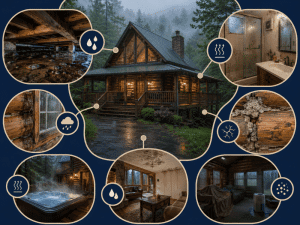
- Crawl spaces without proper vapor barriers — Ground moisture rises directly into unprotected crawl spaces, creating a persistently damp environment where mold thrives.
- Poorly ventilated bathrooms and kitchens — Many older cabins have inadequate exhaust ventilation, allowing steam and cooking moisture to accumulate in walls and ceilings.
- Leaking roofs, windows, or log walls — Any water intrusion that isn’t promptly addressed becomes a mold growth opportunity. Log cabins are particularly susceptible to moisture intrusion through deteriorated chinking or checking in the wood.
- Vacation rental properties with high occupancy — Rental cabins often see heavy use from guests who may not report minor leaks or moisture issues, allowing problems to go undetected for months.
- Properties left vacant in off-season — Cabins that aren’t actively heated and dehumidified during cooler months can develop mold quickly in a humid mountain climate.
What Does Mold Testing Include?
A standard home inspection includes a visual assessment of accessible areas for signs of mold or moisture damage. However, visual inspection alone can’t tell you whether mold spores are present at elevated levels in the air — or hidden behind walls and under flooring.
When we add mold testing to your inspection, the process includes:
- Air sampling — Samples are collected from inside the cabin and compared to an outdoor baseline. Elevated indoor spore counts indicate a mold problem even if you can’t see it visually.
- Surface sampling (when warranted) — If visible mold growth is present, surface samples can identify the species and help determine remediation needs.
- Lab analysis — All samples are sent to an independent certified laboratory. Results are typically returned within 24-48 hours.
- Written report — You receive a clear report showing spore counts, types of mold identified, and guidance on next steps if elevated levels are found.
If mold is present at problematic levels, you have options. You can request that the seller remediate before closing, negotiate a price reduction to cover remediation costs, or — in severe cases — walk away from the deal. The key is knowing before you close.
How Much Does Mold Testing Cost?
Mold testing is one of the smartest add-ons a Smoky Mountain cabin buyer can request. Through August 31, 2026, Accu-Spec is offering 50% OFF mold testing when you use promo code MOLD26 at scheduling.
To take advantage of this offer, simply mention code MOLD26 when you call 865-658-1050 or add it when you schedule online. This is a limited-time offer — book your inspection before August 31 to lock in the discount.
Even at full price, mold testing is a fraction of the cost of mold remediation — which can run anywhere from a few hundred dollars for minor surface mold to tens of thousands for a serious structural infestation. The cost of testing is negligible compared to what you’re protecting.
When Should You Add Mold Testing to Your Inspection?
We recommend adding mold testing to your home inspection any time you’re purchasing a Smoky Mountain cabin, but especially when:
- The property has had any known water damage or leaks
- You notice musty odors during your showing or walkthrough
- The cabin is a vacation rental that has been under heavy occupancy
- The crawl space is unencapsulated or you can see signs of moisture
- The property has been vacant or under-heated for extended periods
- You see staining or discoloration on walls, ceilings, or under sinks
- The cabin is older and has not had recent updates to plumbing or roofing
Even if none of those conditions apply, mold testing provides peace of mind. In the Smoky Mountain environment, it’s simply a smart precaution for any buyer.
Tom Maides has been inspecting homes in Gatlinburg and across East Tennessee since 1993. When you hire Accu-Spec, you get Tom personally on every inspection — and the knowledge to protect your investment. Call 865-658-1050 or schedule online now.
50% OFF Mold Testing — use code MOLD26 through August 31, 2026.